
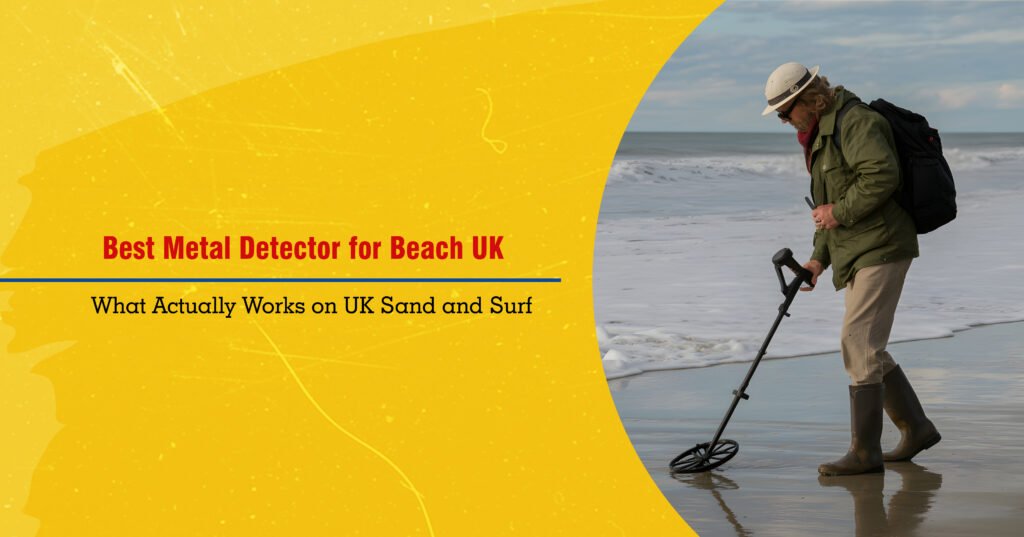
The best metal detector for UK beach conditions is not simply the one with the deepest claimed detection range. UK beaches give a detector a very different job from a field or pasture, particularly once the coil reaches wet sand near the waterline. Salt, damp sand and changing ground conditions can make an ordinary machine chatter and false constantly, turning what should be an enjoyable session into a hunt for signals that are not really there.
That is also what makes beach detecting so appealing once the right machine is under your arm. There are no crops to worry about, the foreshore can be searched in changing conditions, and modern losses such as rings, watches and coins are regular finds on busy beaches. Older material can turn up too, particularly on coastlines with a long history of ports, settlements and changing shorelines.
The key is matching the detector to the sand you actually intend to search. A machine that is perfectly happy on dry upper beach can behave very differently once it reaches wet salt sand. This guide looks at what a beach metal detector needs to cope with, then compares five machines from UK Metal Detectors at different prices.
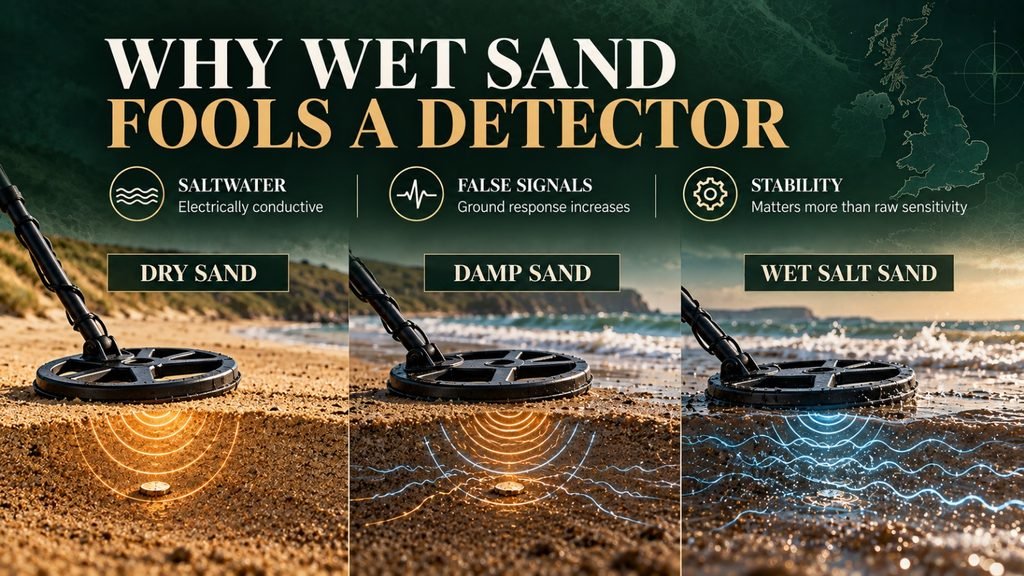
Most standard metal detectors struggle on wet salt sand because the saltwater in the sand is electrically conductive and can produce its own response through the coil. A normal VLF detector can interpret that conductive layer as a target, causing unstable signals, false readings, and a constant need to adjust settings. The problem becomes most obvious around the wet foreshore, exactly where many detectorists want to search.
Salt behaves differently from the iron mineralisation found in much of the inland ground we detect over. The detector has to compensate for the conductive salt environment rather than simply balance against mineralised soil, and sensitivity or discrimination alone will not magically solve it. Our metal detector ground balance guide explains the process in more detail, but the practical lesson is simple: beach-specific handling matters.
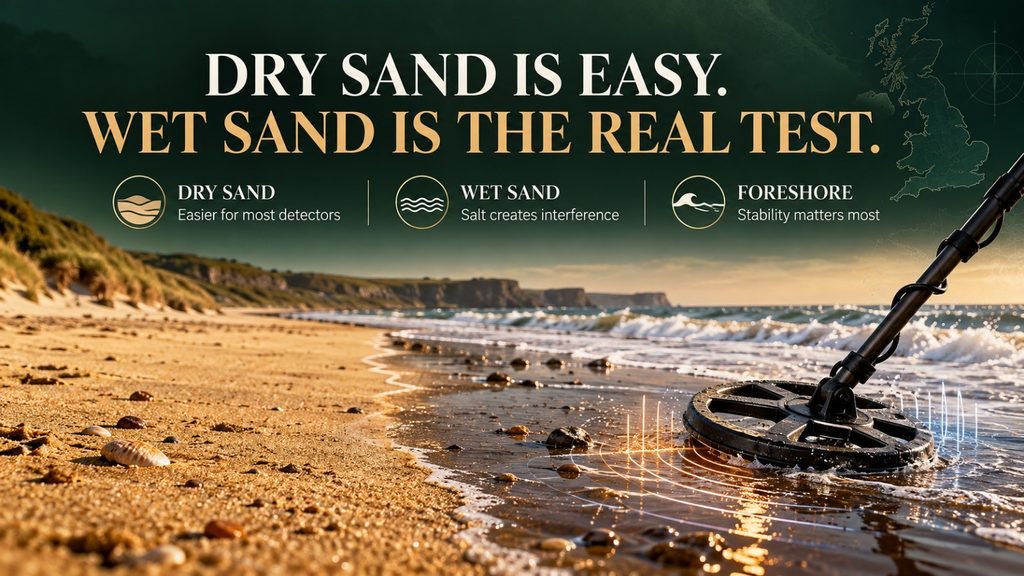
Dry sand is a much easier proposition. Above the high tide line, a standard detector can often work comfortably because the sand contains far less conductive moisture, while the wet area closer to the water demands more from the machine. That distinction is worth remembering before buying a detector based on how well it performs on dry sand alone.
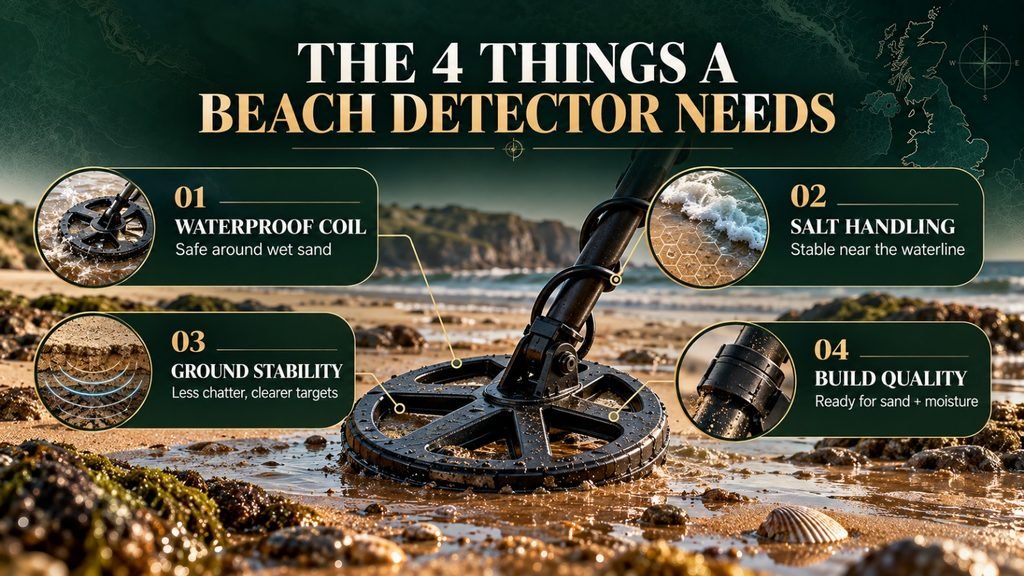
A good beach metal detector UK buyers can rely on needs four things: a waterproof search coil, sensible handling of salt conditions, stable operation in wet sand, and enough build quality for regular exposure to sand and moisture. Those requirements matter far more than having a long list of clever-sounding features. The machine has to stay usable when the ground changes under your feet.
A waterproof coil is essential if the search is going beyond dry sand. There is a big difference between coping with rain and being safe when the coil is repeatedly pushed into wet sand or shallow water. The control box does not necessarily need to be submersible for ordinary foreshore detecting, but the coil needs proper waterproof protection.
Beach or saltwater ground handling is the other major consideration. A standard automatic ground balance is primarily dealing with soil mineralisation, while beach settings help the detector cope with conductive salt. Pulse Induction machines take a different approach and are popular for serious saltwater work, which is why our pulse induction metal detectors guide is worth reading before stepping into that category.
Finally, stability matters more than raw sensitivity. A detector that runs quietly enough to let you hear a genuine target is far more useful than one turned up so high that every sweep produces noise. On a busy UK beach, being able to move between dry and wet sand without fighting the detector makes a noticeable difference.
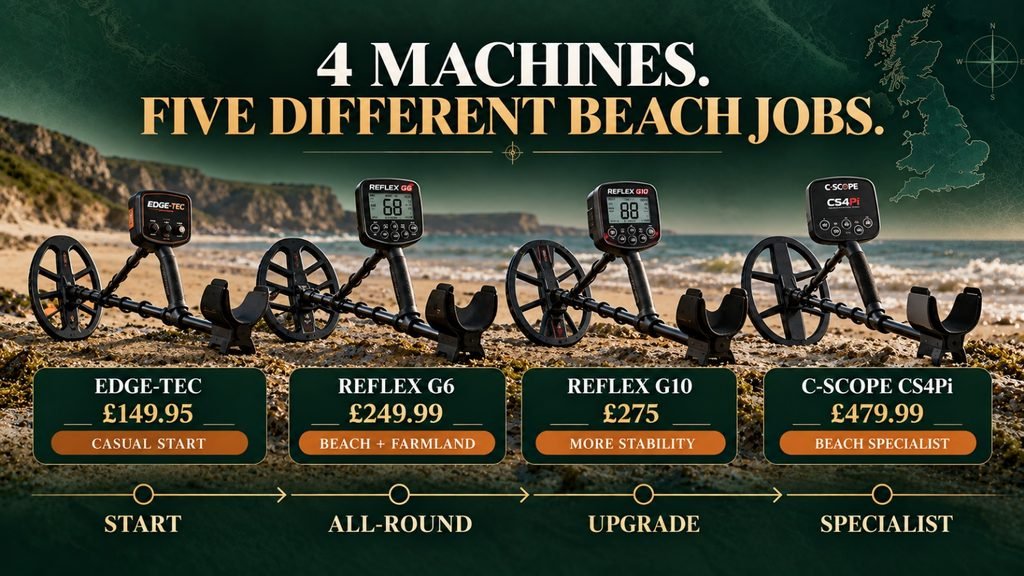
The best beach metal detector UK buyers should consider depends heavily on where and how often they detect. Five machines in the UK Metal Detectors range cover very different needs, from a first detector for occasional beach trips to a specialist machine built around beach work.
The Edge-Tec is the lowest-cost option here at £149.95, and it earns its place because the site specifically lists it as suitable for beach detecting, including wet sand conditions. Its waterproof coil and adjustable discrimination give a newcomer the basic tools needed to start searching without putting a large amount of money into the hobby. That makes it a sensible starting point for someone who wants to see whether beach detecting becomes a regular habit.
We would put it firmly in the beginner and casual-use category. It makes sense for dry sand and lighter wet sand sessions, particularly when the detector will also be used away from the coast. Someone planning to spend most weekends working the wet intertidal zone should look higher up the range.
The Reflex G6 costs £249.99 and takes a different route to beach capability. It is an all-round detector with a 19kHz operating frequency, fast recovery, and a ground balance system that the product page states can be balanced to wet sand. The waterproof coil also makes it practical for normal beach use.
That combination matters for detectorists who do not want a beach-only machine. The G6 can move between farmland and coast without making either environment its afterthought, and the faster recovery is useful when several targets sit close together. If one detector has to cover most of your detecting, this is one of the more sensible compromises in the range.
The C-Scope CS4Pi is the specialist choice at £479.99. It is UK-made by C-Scope and sits in the Beach Detecting category on the site, with its Variable Frequency Motion Search System aimed specifically at beach conditions and an All Metal Super Depth Mode for beach searching.
The control box can be detached and belt-mounted, which is a practical touch when working around the surf. There is also no complicated setup ritual before a search, as the CS4Pi is built around a straightforward switch-on-and-go approach. That simplicity is part of its appeal when the whole point of the machine is to get onto the beach and start searching.
There is a trade-off, though. The CS4Pi is a specialist rather than an all-purpose detector, so its strongest reason for being on this list is also the reason not to buy it for someone whose main interest is farmland or general inland detecting. For regular beach sessions, its focus makes sense.
At £275, the Reflex G10 sits in an interesting position because it costs less than the CS4Pi while offering a step up from the G6 in some areas. Its improved LCD gives the detectorist more information from the target response, while customer reviews specifically mention stable operation on the beach and highly mineralised sites. The waterproof coil also keeps it suited to wet beach work.
Stability is particularly useful when the sand changes beneath the coil. A detector that settles into the ground instead of constantly producing false signals leaves you with more confidence in the targets you choose to recover. For someone moving up from a basic machine, the G10 is the option to consider when beach stability and clearer target information matter more than having a dedicated beach-only detector.
| Machine | Price | Beach Type | Key Strength | Best For |
| Edge-Tec | £149.95 | Dry and light wet sand | Accessible, waterproof coil | Casual beginners |
| Reflex G6 | £249.99 | Dry sand and wet foreshore | Ground balance, fast recovery | Beach and farmland |
| C-Scope CS4Pi | £479.99 | Wet sand, surf zone, foreshore | Purpose-built beach specialist | Regular beach use |
| Reflex G10 | £275 | Broad beach use | Stability, improved LCD | Upgrading detectorists |
The right choice depends on the ground you search most, how often you get onto the beach, and whether the detector also needs to work inland. If you are stuck between two machines, the UK Metal Detectors team can advise on the practical differences before you spend the money.
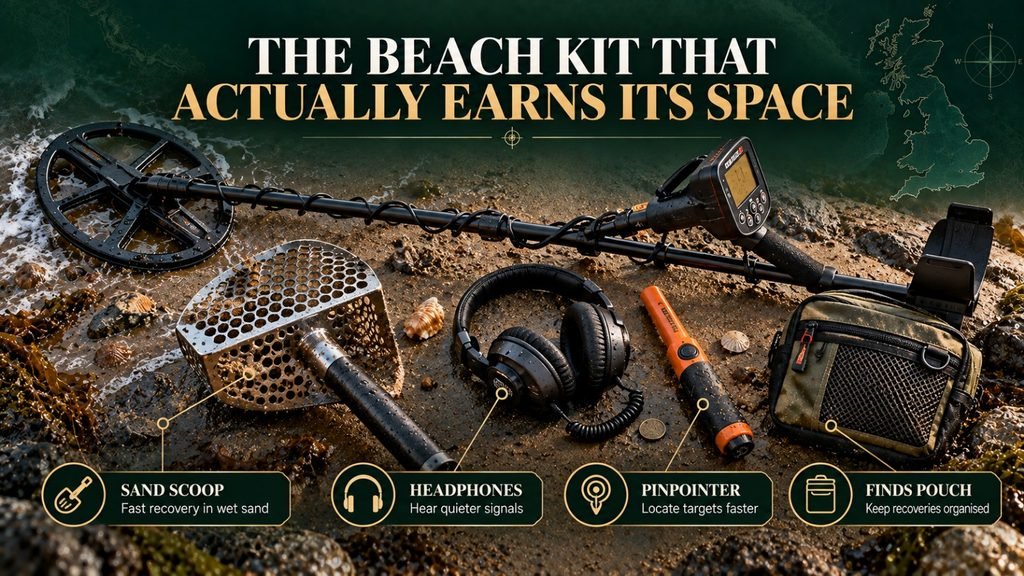
A sand scoop is the most useful extra piece of kit for anyone planning to recover targets from wet sand or the surf zone. Loose wet sand falls straight back through your fingers and can make a simple recovery surprisingly awkward, while a perforated scoop lets the sand drain away while the target stays inside. The difference becomes obvious after a few recoveries.
A scoop also saves time when the tide is moving, and the target is sitting in constantly shifting sand. The GM-4 package and Lander XD100 PRO include sand scoops, so package contents are worth checking when comparing the real value of different setups. Our metal detecting accessories guide covers the rest of the useful beach kit.
Headphones are another small upgrade that can make a session easier. Wind, waves, and people nearby can drown out quieter signals through the detector speaker, while headphones let you concentrate on the response from the coil. The Golden Mask 6 includes wireless headphones, while the Reflex G6 and G10 support wired headphones.
Metal detecting is generally permitted on Crown Estate foreshore in England, Wales and Northern Ireland without a specific Crown Estate permit, although local restrictions, private ownership and other rules still need checking. The relevant area is the foreshore between the mean high and mean low water marks, and responsible detecting means respecting the beach, other users and reporting obligations. The Crown Estate foreshore access guidance is the sensible place to check the current position before heading out.
Responsible recovery matters just as much as choosing the machine. Holes should be filled, rubbish should be removed where practical, and finds should be dealt with according to the applicable rules rather than simply taken home without thought. The NCMD Code of Conduct is useful reading before a first session, particularly for anyone new to detecting on public beaches.
Modern losses are the most obvious targets on busy beaches. Rings, earrings, watches and coins can be lost by visitors around swimming areas, paths, cafes and places where people sit, while older finds can occasionally appear on historically active stretches of coastline. Our guide to the best places for metal detecting in the UK is a useful next step if you are deciding where to take the machine.
Scotland has different access arrangements, with the Scottish Outdoor Access Code providing general access rights to much of the foreshore. Local restrictions and specific ownership still matter, so the fact that a beach is accessible does not automatically mean every form of detecting is permitted there. Check the rules for the exact stretch of coast before starting a search.
The best metal detector for beach UK conditions is the one that matches the ground you actually plan to search. The Edge-Tec keeps the starting cost low, the G6 and G10 give you more flexibility beyond the coast, and the Golden Mask 6 offers three selectable frequencies for experienced detectorists who want more control. The C-Scope CS4Pi remains the clearest choice for someone who wants a machine focused specifically on beach detecting.
Beach detecting rewards the right setup because wet sand exposes weaknesses very quickly. A machine that constantly chatters near the waterline can turn a promising stretch of foreshore into hard work, while a stable detector lets you concentrate on the signals that deserve recovery. Add a decent scoop, a pair of headphones, and a little preparation around local access rules, and the first session becomes much more straightforward.
If your current detector struggles once it reaches wet sand, or you are choosing your first machine for the coast, the UK Metal Detectors team can help match the detector to the beach and type of detecting you have in mind. A quick conversation can save you from buying a machine that is fine on dry sand but frustrating at the waterline.
The best metal detector for beach use in the UK depends on how seriously you plan to detect. The Edge-Tec at £149.95 is the accessible choice for beginners, while the C-Scope CS4Pi at £369.99 is the specialist option for regular beach work. The Reflex G6 and G10 make more sense if the same detector also needs to handle farmland and other inland ground.
The search coil should be waterproof if you plan to detect on wet foreshore or near shallow water. The control box does not have to be submersible for ordinary beach detecting, although some protection from rain and spray is sensible in UK weather. Always check the exact waterproof rating of the machine before putting any part of it into the sea.
A normal detector can work well enough on dry sand, but wet salt sand is a different problem. A VLF detector without suitable beach handling can produce frequent false signals because the conductive saltwater in the sand affects the detector’s response. For regular wet-sand detecting, a machine with appropriate beach handling is a much more practical choice.
Detecting is generally permitted on Crown Estate foreshore in England, Wales and Northern Ireland without a specific Crown Estate permit, but that does not cover every privately owned or locally managed beach. Detectorists also need to follow responsible detecting practice and the relevant reporting rules for significant finds. Scotland has its own access framework, so local rules should always be checked.
The Edge-Tec at £149.95 is the budget choice in this range, with a waterproof coil, adjustable discrimination and stated suitability for wet sand. It is a reasonable first step for someone who wants beach capability without spending heavily. The Edge-Tec Pro at £179.99 is another option if you want more discrimination control and display information for the relatively small increase in price.