On this page
Finding legal metal detecting sites near you in the UK comes down to five practical routes: Crown Estate foreshore beaches, local detecting clubs, organised rallies, Portable Antiquities Scheme research, and direct landowner permission. You don’t need to spend weeks wondering where you’re allowed to go, but you do need to know which route fits the ground you want to search.
There isn’t a national map showing every detecting site or a central list of permissions. The good news is that there are reliable ways to find detecting near me opportunities close to home, and most of them can be started today.
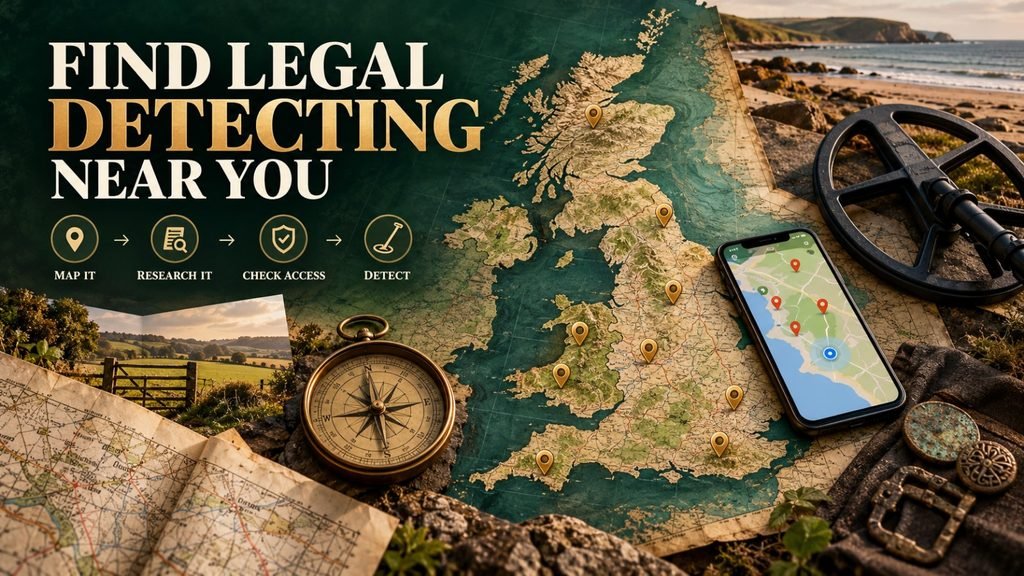
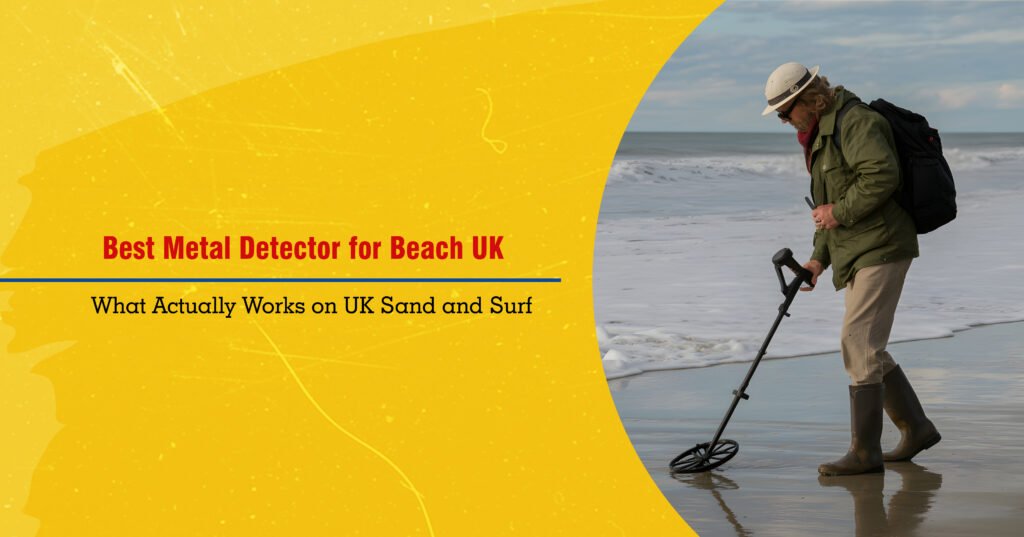
Crown Estate foreshore is the easiest place to start detecting across most of England, Wales and Northern Ireland because its published terms allow detecting without a specific permit on the foreshore. The foreshore means the strip between the mean high and mean low tide marks, and The Crown Estate owns approximately 55% of the UK’s coastline foreshore.
That makes beaches a practical first stop if you’ve just bought a detector and are itching to get out. You’ll still need to check who controls the section you’re standing on, because areas above the high tide mark can belong to the local council or another owner, including car parks, promenades and dunes.
Scotland works differently because the Scottish Outdoor Access Code provides general foreshore access rights. The exact ground still matters, so don’t assume that being beside the sea automatically means detecting is allowed everywhere.
Beach detecting usually means modern coins and jewellery rather than centuries old artefacts. That’s actually a useful way to learn your machine without having to sort out a private field permission first, even if beaches aren’t usually the most historically productive ground.
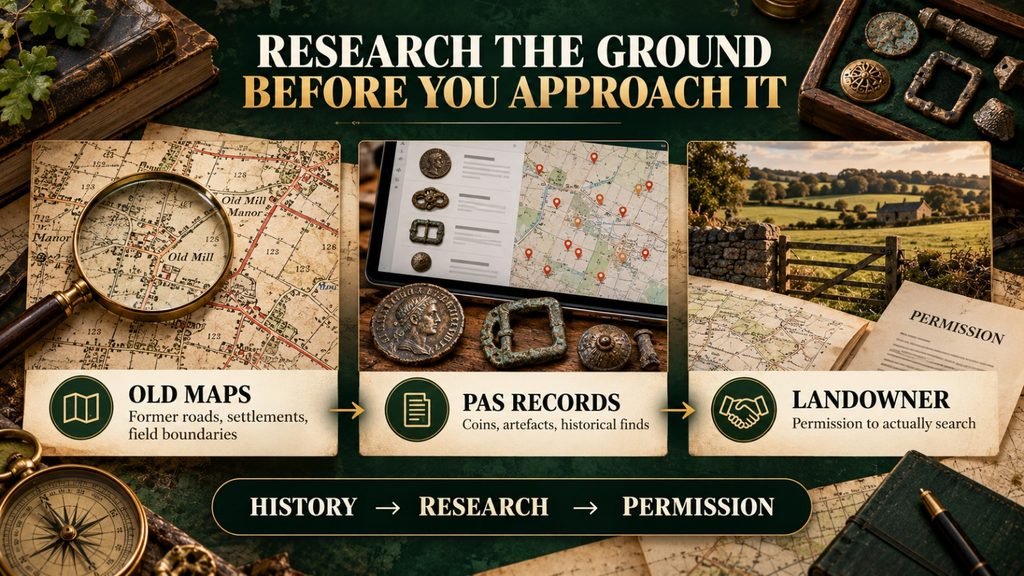
The Portable Antiquities Scheme database is one of the best free research tools for finding out what has already been discovered around your area. You can search by county, parish or general location and see the types of coins and artefacts that have been recorded there.
The database can show patterns that aren’t obvious from simply looking at a field on Google Maps. If a particular area has repeated records from certain historical periods, that gives you a reason to investigate the surrounding ground more closely before approaching a landowner.
The 2025 figures show just how much local information is available, with Norfolk recording 2,362 finds, Hampshire 1,387 and Lincolnshire 1,307. The public records don’t give you exact findspot coordinates, but they can still help you understand which parishes and general areas have a history worth researching.
A Finds Liaison Officer can also become a useful local contact because the Portable Antiquities Scheme identifies the relevant officer for your area. These officers help with identifying finds and are worth knowing if you’re taking the recording side of detecting seriously.
Research is useful, but it only gets you to the next step. Once you’ve found an area that looks historically interesting, you’ll need permission before you put a coil over private ground, which is where the metal detecting permission guide comes in handy.
The affordable option
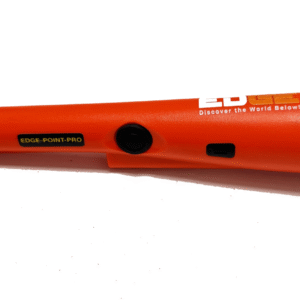
Pinpointer. Finds the target in the hole instead of the spoil.
£49.95£69.99Save £20.04
Add to basketFull detailsIn stock
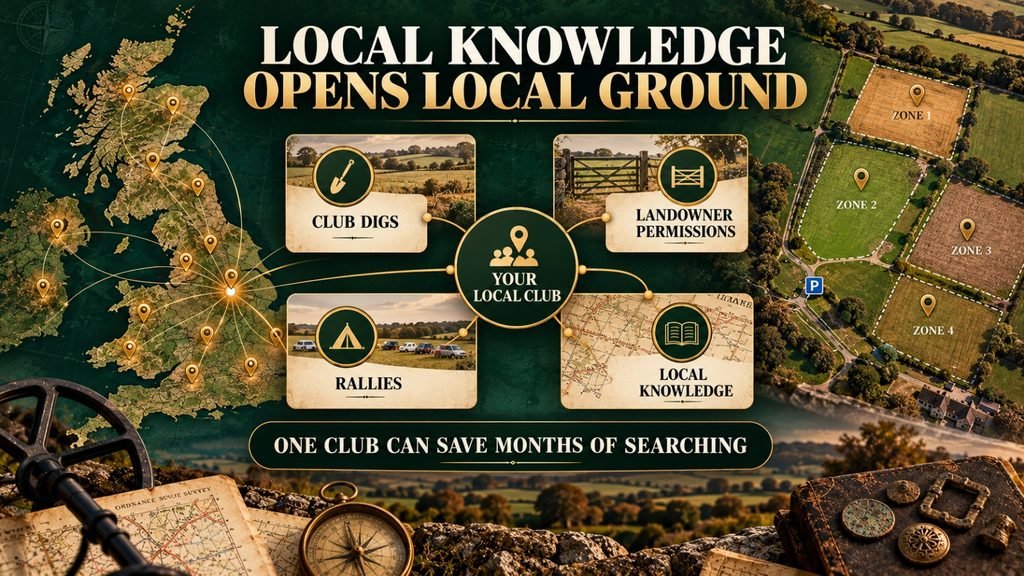
Joining a local detecting club is often the fastest way to get onto productive ground without having to find every permission yourself. Established clubs can have years of existing landowner relationships, so members can access organised digs on ground that would otherwise take a long time to secure independently.
The NCMD club directory is a straightforward place to start looking for clubs by county and region. Most parts of England, Wales and Scotland have active detecting communities, so there is a good chance there is a club within reasonable travelling distance.
Club membership can give you regular organised digs, access to existing permissions and advice from people who already know the local ground. You also get something that’s difficult to learn from a search engine: local knowledge about which areas have produced finds and which landowners are happy to work with detectorists.
Regional Facebook groups can be useful for the same reason. Searching for your county followed by “metal detecting club” or “metal detectorists” will often bring up active local communities where digs, opportunities and local events are shared.
Local knowledge can save you a lot of wasted effort. Instead of spending Saturday morning driving around looking for somewhere to detect, you can learn from people who have already done that groundwork.
Metal detecting rallies give you a simple way to search approved farmland without doing the landowner groundwork yourself. The organiser sorts the landowner permission, insurance and site access, while you buy a ticket and turn up ready to detect.
Rally tickets typically cost around £10 to £30 per day, although the exact price depends on the event. Some are small local digs, while larger events such as Detectival in September, Buckinghamshire can bring hundreds of detectorists together.
The biggest advantage is variety. A rally can put you on ground that you may never have found or secured independently, and you also get the social side of detecting alongside people who already know the hobby well.
The metal detecting rallies UK guide is useful if you’re planning your first event and want to know what to expect. Regional Facebook groups, the UK Detectorist events page and NCMD member events are also places to look for upcoming rallies near you.
Most rallies require NCMD membership, and under 16s can be added free to adult accounts under the relevant membership arrangements. Check the event details before booking because individual organisers can have their own entry requirements.
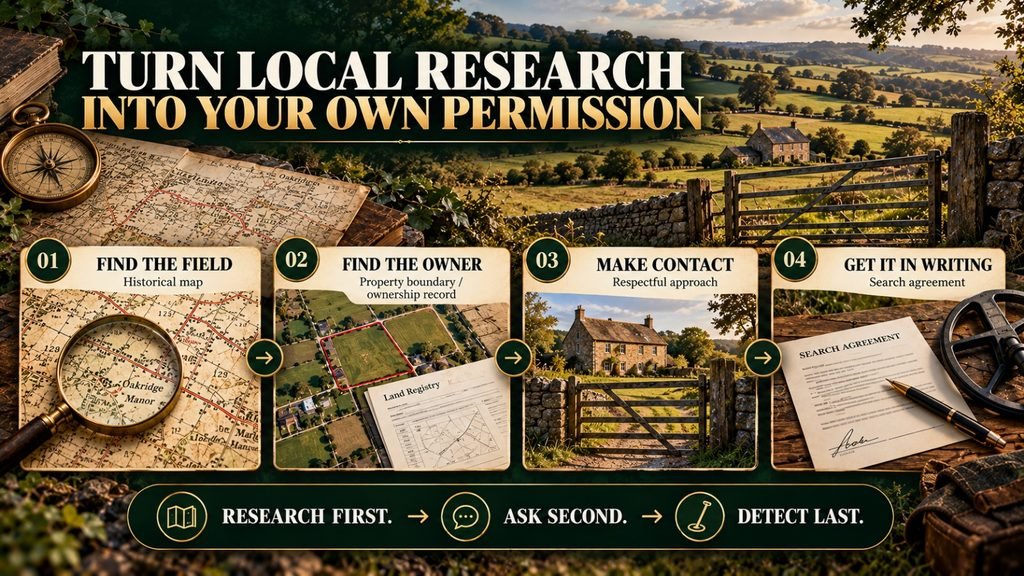
Directly approaching landowners is the route to building a long term permission close to home. It can feel awkward the first time, especially when you’re standing outside a farmhouse wondering how to explain why you’re there, but this is how many experienced detectorists build access to good local ground.
HM Land Registry’s Find a Property service can help identify ownership by searching an area on a map for £3. Knowing who owns the field means you can approach the right person instead of knocking on random doors and hoping for the best.
The National Library of Scotland’s historical OS map viewer is another useful research tool because old maps can reveal former settlements, trackways and earlier land use. Cross referencing that information with PAS records gives you a much stronger reason for choosing one field over another.
The best approach is simple and respectful. Go in person around mid morning on a weekday, leave the detector in the car, and take something that shows you’ve actually researched the farm or surrounding area, such as an old map reference or a note about its history.
A landowner mainly needs to know that you’ll treat the property properly. Explain that you’ll fill every hole, leave no trace, report significant finds correctly and carry NCMD insurance, then offer a written agreement rather than relying on a handshake.
The NCMD provides a standard Search Agreement template that can be used for this purpose. Having both sides sign an agreement removes a lot of uncertainty and gives everyone a clear understanding of what has been agreed.
Most farmer approaches will end in a no, and that’s normal. Experienced UK detectorists often report that roughly one in four to five well targeted approaches produces a yes, so ten sensible approaches could mean two or three genuine permissions.
That makes persistence more useful than trying to find one magical field. The research gets you in the door, but how you behave after getting permission is what can turn a short trial into a long term relationship.
The serious choice
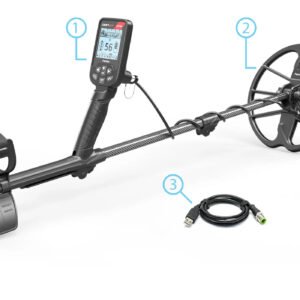
15 kHz, fully waterproof, light, with six search modes.
£299.95£349.95Save £50
Add to basketFull detailsIn stock
| Route | Speed | Cost | Best For |
| Crown Estate foreshore beach | Immediate | Free | First session, modern finds |
| Local detecting club | Within days | Membership fee | Ongoing regular detecting |
| Organised rally | Weekend planning | £10 to £30 ticket | Variety and community |
| PAS database research | A few hours | Free | Finding historically interesting local ground |
| Direct landowner approach | Days to weeks | Free | Long term productive farmland access |
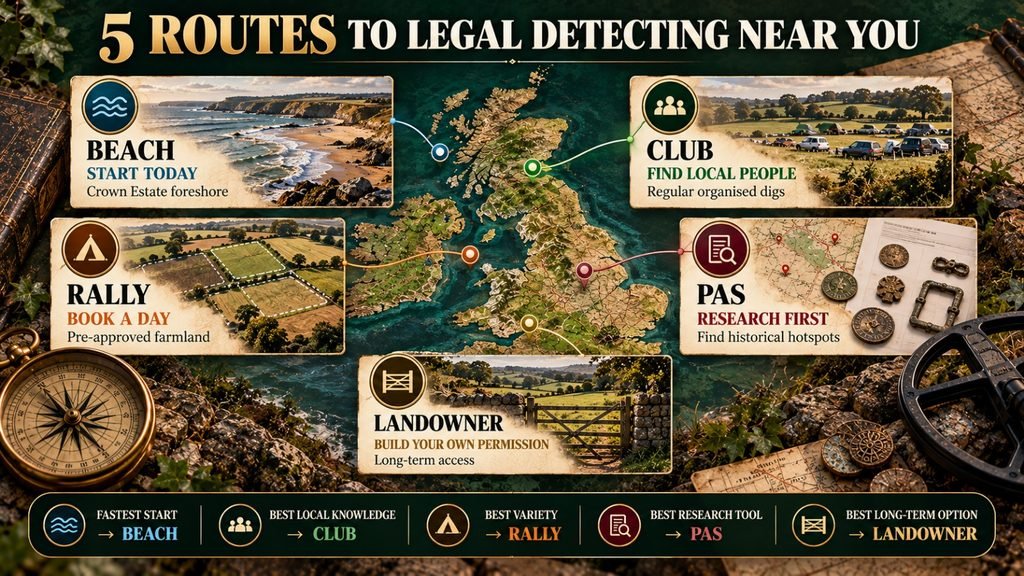
Getting from “where can you actually go?” to standing on legal detecting ground can take only an afternoon of sensible research. You might find a suitable beach, locate a nearby club, spot a rally or identify a farmer whose land is worth approaching.
The best places for metal detecting in the UK aren’t always famous locations that everyone talks about. A field within 30 minutes of home can become far more interesting once you know its history and have the landowner’s permission to search it.
Your first permission may take a few conversations, and your first few sessions may produce nothing more exciting than modern coins and bits of scrap. That’s fine. The point is to get out, learn your ground and build from there.
If the machine is already sorted, the next step is finding somewhere legal to use it. If you’re still choosing your detector, the beginner’s guide to using a metal detector can help you understand what your first session will actually involve.
The right machine can make a big difference depending on where you plan to detect. Fields, beaches and other ground conditions can all call for different features, so it’s worth choosing your detector based on where you’ll actually be searching.
Not sure which metal detector is right for your local sites? Contact UK Metal Detectors for help choosing the right machine for your needs.
You can find legal metal detecting sites near you through Crown Estate foreshore beaches, local clubs, organised rallies, PAS research and direct landowner permission. Beaches can offer the quickest start, while clubs and rallies can put you onto approved ground without having to build your own permission first. PAS research is useful for understanding the history of your local area before approaching farmers.
No, you can’t detect anywhere you like without permission. All land has an owner, and detecting without explicit landowner permission is trespass, while protected sites have additional restrictions. Crown Estate foreshore in England, Wales and Northern Ireland is the practical exception covered by the Crown Estate’s published terms, while Scheduled Monuments, National Trust land and Sites of Special Scientific Interest remain off limits regardless of a normal private permission arrangement.
The NCMD club directory is the easiest starting point for finding local metal detecting clubs by county and region. Most counties have an active detecting community, and local Facebook groups can also be useful for finding nearby club digs and informal opportunities. Searching your county name alongside “metal detecting club” or “metal detectorists” can bring up active local groups quickly.
Yes, the Portable Antiquities Scheme database is very useful for researching areas before you approach a landowner. It lets you search recorded finds by location and see which historical periods and types of artefacts have been found in a parish or wider area. It won’t give you a list of fields where you can legally detect, but it can show you where the local history is worth investigating.
The best approach is to research the land first, identify the correct owner, then ask politely in person with something useful to show. Visiting mid morning on a weekday, leaving your detector in the car and bringing a historical map or local research note can make the conversation feel much more genuine. Carrying NCMD insurance and having a written Search Agreement ready also shows the landowner that you understand the responsibility involved.
Not sure which of these suits the ground you search? Tell us where you detect and we will point you at the right one, including the cheaper one when that is the honest answer. We use these machines ourselves.