On this page
Want to see what we stock? Browse our long range and gold detectors, from entry-level machines to professional 3D ground scanners.
Imagine standing at the edge of a huge open field in rural England. No obvious signs. No disturbed soil. Just acres of land stretching ahead of you.
A standard detector would ask you to walk every metre of it.
A long-range metal detector works differently.
Instead of only detecting what sits beneath a search coil, these systems are designed to scan wider areas, analyse deeper underground signatures, and help identify potential targets before excavation even begins.
That distinction matters more than most buyers realise.
Traditional detectors are excellent for coins, jewellery, and shallow relic hunting. But when you’re searching for buried caches, underground voids, gold-bearing zones, or deep archaeological targets, you move into a completely different category of detection technology.
That’s where professional long-range locator metal detectors come in.
And yes, this category attracts scepticism too. Some devices genuinely use advanced technologies like pulse induction, ionic analysis, and 3D imaging, while others make exaggerated claims. This guide cuts through that noise.
Rather than listing random products, we’ll explain what actually matters, how these systems perform in UK conditions, and which models are worth considering if you’re looking for a serious, deep metal detector UK prospectors can rely on.
Because successful underground treasure detection is far less about hype and far more about using the right technology for the right type of search.
One of the biggest misconceptions in the industry is that a long-range locator metal detector is simply a “more powerful” version of a normal detector.
It isn’t.
It’s a different tool built for a different purpose entirely.
Most detectorists in the UK are already familiar with traditional coil-based machines.
A transmitter coil sends an electromagnetic field into the ground. When buried metal disrupts that field, the detector reads the change and alerts the user.
Simple in principle. Extremely effective in practice.
This is why standard VLF, pulse induction, and multi-frequency detectors dominate coin hunting, relic detecting, beach detecting, and jewellery recovery. They offer precise target separation, good discrimination, and strong performance for shallower targets.
In realistic UK soil conditions, most standard detectors perform best within roughly 30–50cm for smaller objects, though larger targets can obviously be detected deeper.
What matters here is that detection is localised.
Your search area is essentially determined by the size of your coil and the ground directly beneath it.
For many detectorists, that’s exactly what they need.
But long-distance metal detector systems operate differently.
The short answer is this:
Long-range detectors are designed to identify broader underground signatures across large areas rather than simply detecting metal directly under a coil.
Professional systems often combine several technologies together, including:
What this actually means in practice is that these devices can analyse underground disturbances, metallic ionisation patterns, magnetic anomalies, and signal reflections over significantly larger distances.
This becomes especially important when searching for:
Over time, buried metals can affect the surrounding soil environment. Advanced long-range locator systems attempt to identify and interpret those changes.
That’s why professional units often advertise front ranges measured in hundreds or thousands of square metres and depth capabilities reaching 20–60 metres underground.
Not because they behave like an oversized coil detector but because they use entirely different detection methods.
And importantly, they are not replacements for standard detectors.
Most experienced prospectors use both.
A long-range locator helps narrow the search area. A conventional detector then confirms and pinpoints targets more precisely.
Quick Comparison
| Feature | Standard Coil Detector | Long Range Locator |
| Detection Depth | Up to 1m typical | 20–60m (professional models) |
| Coverage Area | Coil width | Hundreds to thousands of m² |
| Best For | Coins, relics, jewellery | Large caches, gold veins, and voids |
| Skill Level | Beginner–Advanced | Intermediate–Professional |
| Technology | VLF / PI / Multi-frequency | PI + ionic + 3D imaging + LRL |
With that foundation in place, let’s look at the best long-range metal detectors available in the UK right now, each chosen for a very different type of prospector.
These detectors are not ranked by price alone. Each one suits a different type of search, terrain, and experience level.
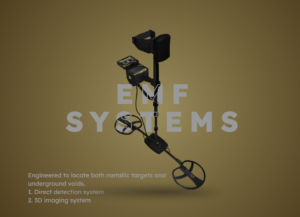
The Titan X13 long-range metal detector is one of the most comprehensive underground scanning systems currently available in the UK market. Built with 11 integrated search technologies, it combines long-range locating, pulse induction, ionic analysis, magnetometer scanning, and 3D EMF imaging into a single professional platform.
With detection depths reaching up to 60 metres and front-range coverage of roughly 3,000 m², it’s designed for serious exploration rather than casual detecting.
The system can identify multiple target types, including ancient gold, raw gold, platinum, silver, copper, meteorites, and gemstones. It also performs particularly well for void detection, making it useful for archaeological surveys and deep-ground investigations.
Where the Titan X13 stands out is in its versatility. It adapts exceptionally well to large farmland searches, historical estate grounds, moorland, and remote terrain where covering ground efficiently matters more than shallow precision recovery.
It does have a learning curve. Beginners may find the number of systems overwhelming at first. But for experienced prospectors and professional survey users, it’s one of the strongest deep-search locator systems currently available.
The affordable option

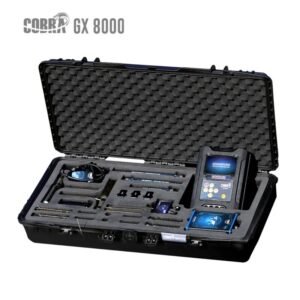
The COBRA GX 8000 blends long-range locating with advanced 3D underground visualisation, making it one of the most intelligent treasure locating systems available today.
Its biggest advantage is the ability to map underground anomalies visually rather than relying only on directional signals. Using the Geoground Analyzer app, users can scan and analyse underground structures directly from a smartphone or tablet.
The detector offers front-range coverage up to 2,000 metres alongside depth capability reaching approximately 40–50 metres under suitable conditions.
Multiple integrated systems include:
The seven adjustable soil settings are especially useful in UK conditions where mineralisation levels vary heavily between regions.
For archaeological survey work, large permissions, or users who want more underground intelligence before digging, the COBRA GX 8000 remains one of the strongest professional-grade options available.
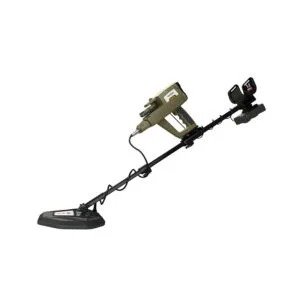
The Viper is a versatile deep-ground detection unit that balances capability with usability surprisingly well.
Unlike highly technical systems that can overwhelm newer users, the Viper keeps things relatively straightforward while still offering serious depth and wide-area scanning performance.
Its multi-system architecture combines long-range locating with pulse induction technology, allowing it to perform effectively across farmland, coastal terrain, moorland, and historical sites.
Target-specific programmes help simplify searching, while the interface remains approachable enough for users moving up from standard coil detectors for the first time.
For many UK detectorists, the Viper hits the sweet spot between advanced performance and practical day-to-day usability.
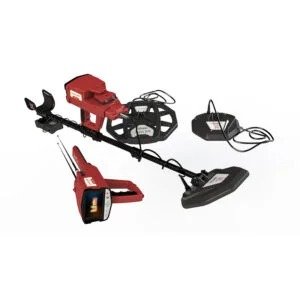
The Mega Concord combines long-range locating with pulse induction technology, making it particularly effective for users searching for both metallic targets and underground cavities.
That combination matters more than many buyers realise.
Historical UK sites often contain tunnels, chambers, burial voids, or disturbed underground structures alongside metallic targets. The Mega Concord is designed to analyse both.
Its digital target guidance system helps improve underground interpretation, while the detector performs reliably in mineralised ground and difficult terrain conditions.
For treasure hunters exploring ancient earthworks, historical estates, or deep buried structures, it offers a strong blend of subsurface scanning and precious metal detection.
The sensible middle

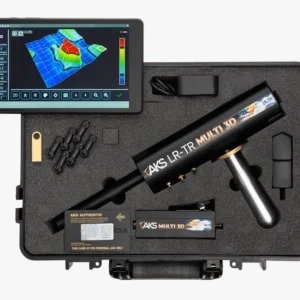
The AKS MULTI GFIS 3D is built specifically around gold frequency identification and signal filtering accuracy.
Its six-filter system helps reduce interference from mineralised soil and underground iron contamination, allowing the detector to focus more precisely on gold and precious metal signals.
The integrated 3D imaging system also improves underground target analysis before excavation begins.
This detector performs particularly well in challenging UK ground conditions where weaker systems often struggle with unstable readings.
If your primary focus is raw gold, ancient gold artefacts, or gold vein prospecting, the AKS MULTI GFIS 3D is one of the more specialised gold prospecting systems available.
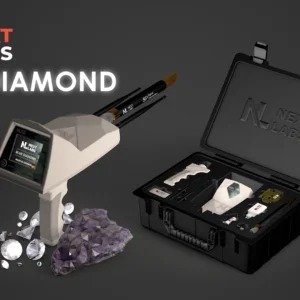
The Blue Diamond is designed for deep target detection across difficult soil conditions, including heavily mineralised terrain common in parts of Wales, Scotland, and Northern England.
Its wide-area scanning capability helps cover larger search zones efficiently, while built-in target discrimination improves separation between valuable targets and common underground metals.
Despite its strong depth performance, the controls remain relatively user-friendly compared to some higher-complexity systems.
For prospectors regularly working mineral-rich ground, the Blue Diamond offers dependable field performance without becoming overly technical.
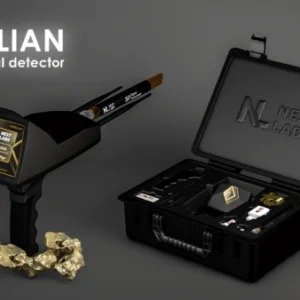
The Aurelian is a specialist long-range locator focused primarily on gold prospecting and ancient treasure detection.
Using ionic field analysis, the system is designed to identify aged buried metals and gold-bearing zones that have interacted with surrounding soil over long periods of time.
This makes it particularly relevant for users exploring historic gold-bearing regions across Wales and Scotland.
Its operation remains relatively straightforward, but the detector still delivers strong deep-search capability for users focused on natural gold deposits and ancient metallic targets.
The serious choice

3D scanner for deep gold targets where a normal detector stops.
£8,499£8,950Save £451
Add to basketFull detailsIn stock
A lot of buyers approach long-range detectors the wrong way.
They start with depth claims.
In reality, the smarter approach is to start with your search environment and target type first.
Because the best long-range detector for open countryside searching may be completely wrong for gold-focused prospecting or archaeological survey work.
Terrain changes everything.
If you’re covering large open permissions, moorland, farmland, or expansive estate grounds, maximum front-range coverage becomes extremely important. Systems like the Titan X13 and COBRA GX 8000 excel here because they can analyse huge search areas efficiently before excavation even begins.
But historically dense sites create different challenges.
Ground iron, buried debris, mineralisation, and centuries of underground disturbance can interfere with weaker systems. In those conditions, signal filtering and discrimination matter far more. That’s where detectors like the AKS MULTI GFIS 3D become valuable.
For mixed UK landscapes where soil conditions vary constantly, versatility often wins. The Viper is particularly strong in this role because it adapts well without demanding constant recalibration.
This is something many buyers overlook initially.
Solo prospectors usually benefit from streamlined single-person locating systems that are easier to manage independently in the field.
But larger survey operations work differently.
Dual-person locating systems, like those available within the COBRA GX 8000 platform, allow teams to cover wider areas more systematically and often improve workflow efficiency during professional surveys.
That becomes especially useful on large historical permissions or archaeological-style search projects.
This question should probably shape your buying decision more than anything else.
If your focus is specifically gold, whether raw deposits, ancient artefacts, or underground veins, specialised systems like the AKS MULTI GFIS 3D or Aurelian make far more sense than broad all-purpose units.
If you want flexibility across multiple precious metals and deep-buried treasures, the Titan X13 remains exceptionally difficult to beat because of its extensive multi-system architecture.
And if underground voids matter alongside metallic targets, the Mega Concord and COBRA GX 8000 become much stronger options thanks to their void-analysis and imaging capabilities.
Long-range detection has a genuine learning curve.
That’s simply the reality.
For first-time buyers entering this category, the Viper offers one of the more accessible introductions without feeling overly basic.
Experienced users already comfortable with multi-system calibration will typically get far more from something like the Titan X13 or COBRA GX 8000.
And for archaeological or professional survey applications, the COBRA’s 3D imaging ecosystem offers particularly strong practical advantages.
A few things are always worth checking before buying too:
Because in practice, usability matters just as much as raw specifications.
The short answer is yes. Professional long-range metal detectors can work effectively in UK conditions when used correctly and with realistic expectations.
But they are not magic devices.
Performance depends heavily on factors like soil mineralisation, target size, electromagnetic interference, detector calibration, and operator experience. That is where many low-quality systems fail. They oversimplify how long-range locating actually works in real-world conditions.
The better detectors in this category use genuine technologies such as pulse induction, ionic analysis, magnetometer sensors, and 3D ground imaging. These are measurable detection methods designed to analyse underground anomalies across larger areas and greater depths than standard coil detectors.
UK conditions also play a major role in performance. Mineral-heavy ground in Wales, Scotland, and parts of Northern England can create unstable readings if the detector is not calibrated properly. That is why multi-system detectors with adjustable soil settings tend to perform far better in British terrain.
Experienced users also approach long-range locating differently. They confirm signals carefully, search in grid patterns, and often combine long-range systems with standard detectors for more accurate target verification.
That is how professional-level searching works in practice.
If you want a deeper explanation of the technology, limitations, and real-world performance behind these systems, read our full guide: Do Long Range Metal Detectors Work?
| Detector | Best For | Depth | Front Range | Systems |
| Titan X13 | All-round professional use | Up to 60m | 3,000 m² | 11 |
| COBRA GX 8000 | 3D mapping + team searching | 40–50m | 2,000m | 5–6 |
| Viper | Versatile all-terrain use | Deep | Wide | Multi |
| Mega Concord | Gold + void detection | Deep | Long | LRL + PI |
| AKS MULTI GFIS 3D | Gold-specific precision | Deep | Long | 6-filter |
| Blue Diamond | Mineralised ground detection | Deep | Long | Multi |
| Aurelian | Gold veins + ancient treasures | Deep | Long | LRL |
If you’re still unsure which system makes the most sense for your terrain or search style, speaking with an experienced specialist genuinely helps.
A short conversation often saves buyers from choosing a detector that’s either too advanced, too limited, or simply wrong for their intended use.
Contact UK Metal Detectors directly for tailored advice based on your search terrain, target type, and experience level.
Long-range detectors perform best when they’re properly calibrated and used systematically. Small adjustments in settings, terrain handling, and search method can make a major difference in accuracy and depth performance.
Long-range metal detectors are built for serious prospecting, deep-ground exploration, and wide-area treasure hunting. The right system can make a significant difference in how effectively you search across challenging UK terrain.
The detectors featured in this guide represent some of the strongest long-range detection systems currently available, combining advanced technology with real-world field performance for serious users.
If you’re ready to explore professional long-range metal detectors, browse the full collection at UK Metal Detectors and find the right system for your next search.
Not sure which of these suits the ground you search? Tell us where you detect and we will point you at the right one, including the cheaper one when that is the honest answer. We use these machines ourselves.