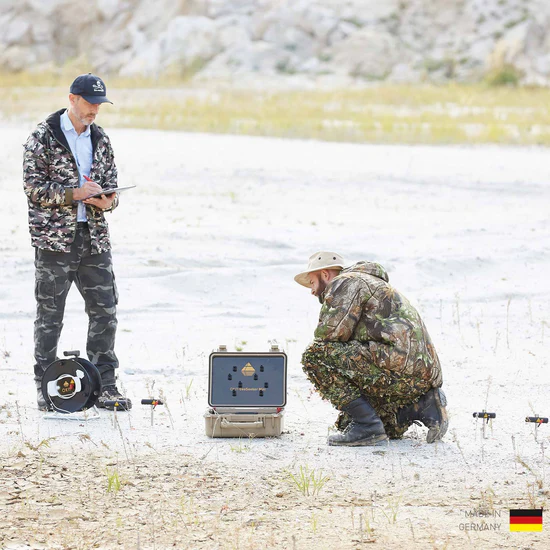
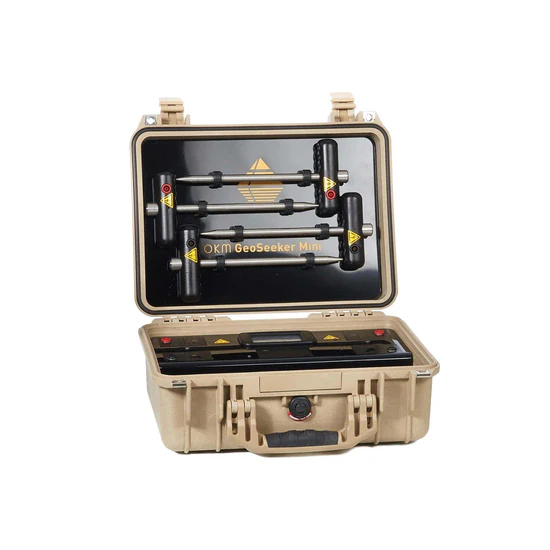




The system uses picture-based guidance, making it easy to operate even without technical language barriers.


This geoelectric water detector can locate:
It is ideal for:
The GeoSeeker Mini is suitable for:
If you want to reduce uncertainty before drilling, this system provides measurable ground data rather than guesswork.
The technical data are average values. Minor deviations are possible during operation.
£9,350. It is a geoelectrical surveying instrument rather than a detector, and the comparison that matters is against the cost of a dry borehole rather than against metal detectors.
It measures soil resistivity using the Schlumberger procedure, a standard geoelectrical method, and converts the readings into a 2D image of the subsurface. Water bearing ground conducts differently from dry rock, and that difference is what shows up.
Up to 100 metres. That is a geological depth rather than an object depth, because you are mapping strata rather than detecting a thing. It is not comparable to a metal detector’s depth figure.
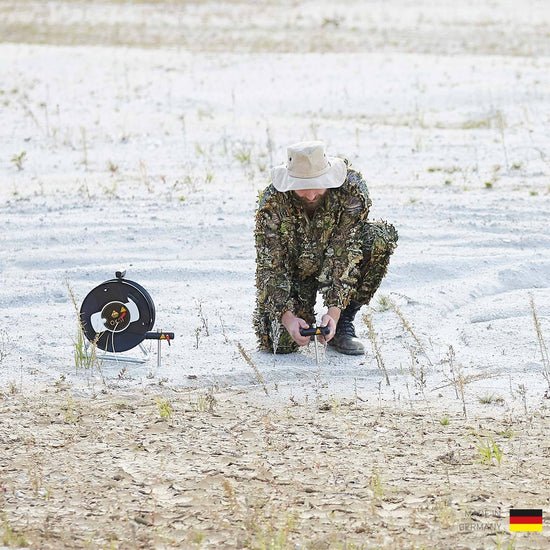
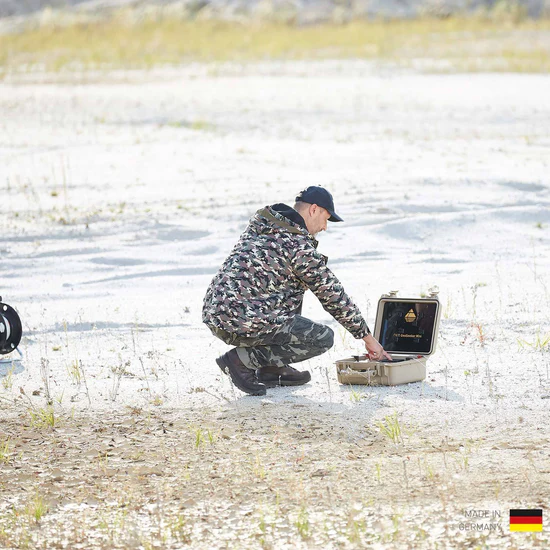
Select your measurement depth, choose the number of scan points, then follow the graphical instructions on the touchscreen and move the electrodes as directed. The guidance is picture based, so language is not a barrier. Review the 2D image at the end.
Fresh water and drinking water sources, water bearing gravel layers, aquifers, groundwater levels, cavities and voids, backfilled wells and other subsurface anomalies. The backfilled well case matters more than people expect on older land.
A minimum of 16 seconds per scan point, so the total depends entirely on how many points you choose. Operating time is roughly 6 to 8 hours per charge, which covers a full survey day.
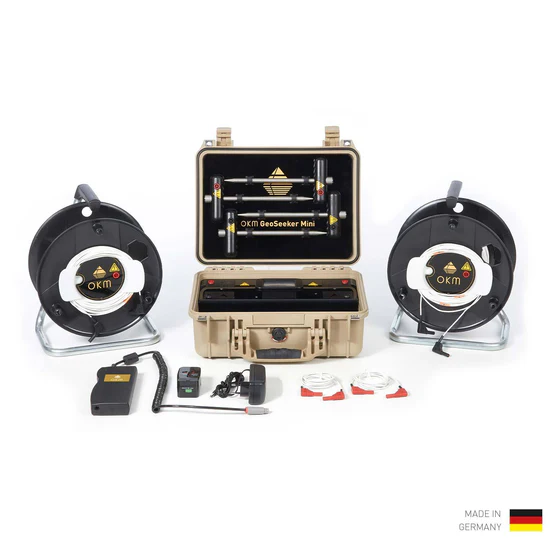
Control unit 410 by 340 by 180mm at 4.5kg, 11 to 13V DC at 30W, a 3.5 inch resistive touchscreen at 480 by 320, an 80MHz Cortex M3 with 4GB data memory, a 16 bit ADC sampling at 4,096Hz, an effective differential range of minus to plus 1,400mV and a 320V at 0.4A output.
Power cable drums measuring 360 by 290 by 200mm at 3.6kg with 100 metres of cable, ten markers and the electrodes. It is a survey kit to carry to site, not a handheld instrument. See our water detectors page for the alternatives.